
Build it in this order
- 1 · Stored value
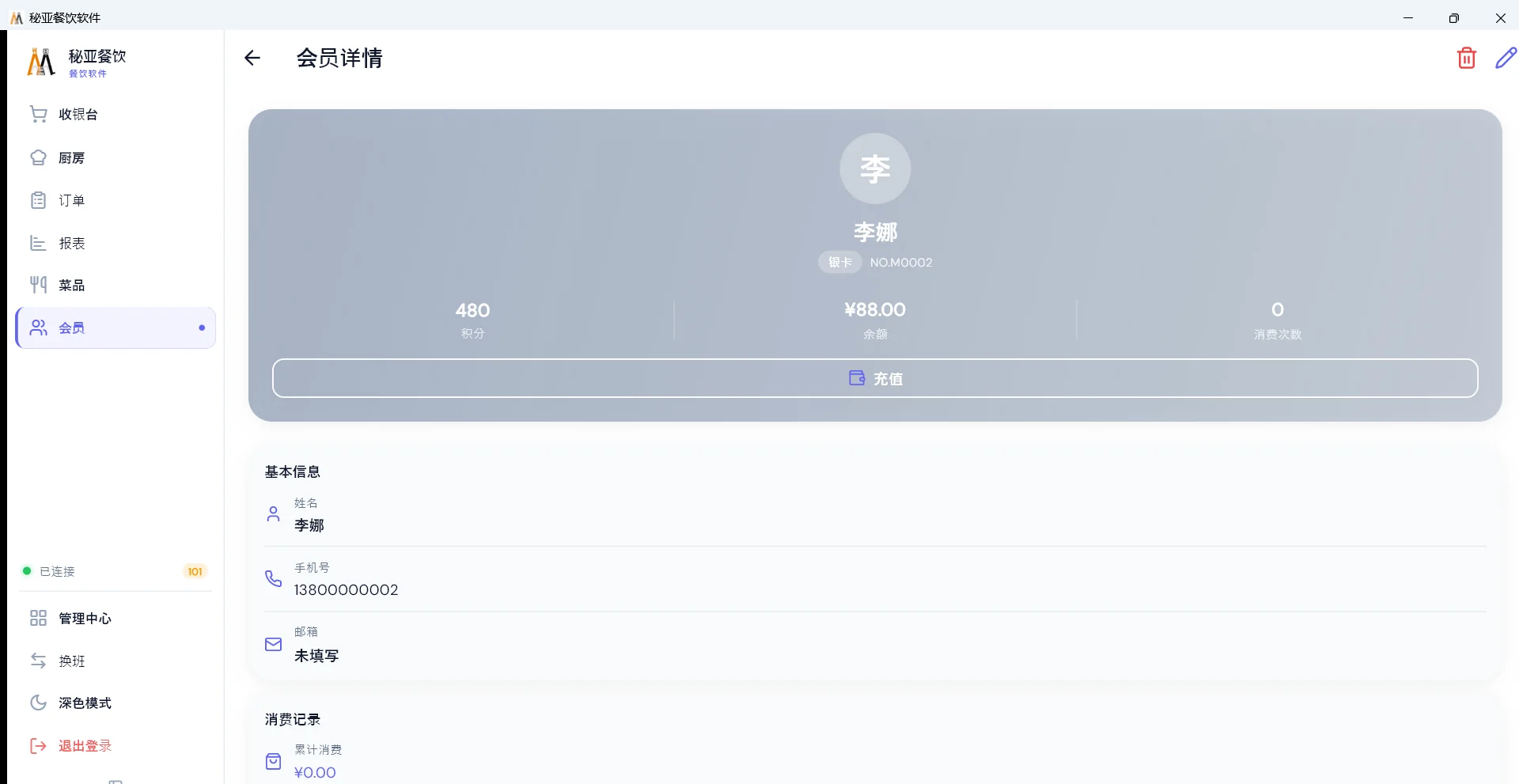
- A guest who tops up 500 and gets a bonus has committed 500 to your shop. Next Tuesday they are not weighing you against the place across the road — the money is already here. Nothing else in a loyalty toolkit is that direct. The balance shows at the till and settles bills like any other tender, including as part of a mixed payment, since a balance rarely matches a bill exactly.
- 2 · A birthday coupon
- Automatic, once a year per member, arriving with a reason attached, and it brings a group rather than one guest — birthdays are eaten with other people. Best effort-to-return ratio of anything a restaurant can run, and it is one configuration.
- 3 · Tiers and member pricing
- Ordinary, silver and gold move on cumulative spend, and each tier can carry a member price so the same dish costs a regular less. It works because a server can explain it at the counter in one sentence.
- 4 · Points, if you still want them
- Fine as an addition, wrong as a foundation. A rule your staff cannot explain in one sentence in the local language will be explained wrong or not at all — and a scheme nobody explains is a scheme nobody joins.
Coupons that do not need a paper list
Three kinds: spend-threshold, percentage discount and free item. Each carries a validity window, a minimum spend and an issue count. Attach the member at checkout and their eligible coupons appear; the cashier scans or taps to redeem and the coupon is spent. Nobody is keeping a notebook of who has already used theirs, and nobody is arguing about it at the counter on a Saturday.
Discounts and member prices are applied before tendering, so the amount being collected is already final rather than something a cashier adjusts by hand — which is also why this does not become another route for manual price edits.
Where the sign-ups come from
The cheapest enrolment point in your shop is the QR ordering flow. The guest is holding their phone, is already on your page and is already deciding. A first-visit coupon offered at that moment costs zero staff time and converts far better than a server asking at the till in their second language.
That is the loop worth building deliberately: the platform or the passing trade brings someone in once, the ordering page signs them up, the stored value and the birthday coupon bring them back — and the third visit costs you nothing in commission.
One thing to be clear-eyed about as an owner
Stored value is a liability, not revenue. It is money you owe in food, and the system accounts for it that way. Restaurants that book top-ups as sales get a flattering month followed by a confusing one, and eventually a cash problem in a quiet season when everyone is eating a balance they paid for in the summer. Run a top-up promotion with that in mind — it is a financing decision as much as a marketing one.
Across branches
Members and balances are shared across stores under one account, so shop two opens with your existing base instead of from zero. That is one of the better reasons to be on a single system before you expand rather than after — see opening a second branch.
Stored value or points — which should we start with?
Stored value, plus a birthday coupon. A guest who has topped up has committed money to your shop and is not choosing between you and the place across the road next week. Points are a slower, weaker lever, and complicated points rules are where most restaurant loyalty schemes quietly die.
Is a top-up counted as revenue?
No, and this matters for reading your own numbers. A stored-value balance is money you owe the customer in food, and the system accounts for it that way. Booking top-ups as sales makes a good month look better than it was and the following month look worse.
Where do sign-ups actually come from?
The cheapest enrolment point in the shop is the QR ordering flow — the guest is already holding their phone and already on your page, so joining costs one tap and no staff time. That converts far better than a server asking at the till in a language they are not comfortable in.
Do members work across branches?
Yes. Members and stored-value balances carry across stores under one account, so a second shop opens with your existing customer base rather than starting from zero.