
What is standard, and what is not
Two different questions hide inside “does it work with delivery”, and most vendors answer the easy one.
Standard: dine-in, takeaway and delivery as three service types on the same till, sharing one dish catalogue with the same options, the same preparation notes and the same station routing. One set of books, so revenue, average ticket and payment mix are one report rather than three you add up by hand at midnight.
Not standard: pulling orders directly from a named local platform. Platform APIs are regional and partner programmes are country-specific — a platform that offers integration in one market may not in the next. Tell us the country and the platform and you will get a yes or a no. What you will not get from us is “we connect to everything”, which is the sentence that leads restaurants to design a workflow around an integration they do not have.
Where no direct connection exists in your market, platform orders are keyed on the till as delivery-type orders. That is a keying step, and everything downstream — routing, reporting, reconciliation — behaves like any other order.
One queue, ordered by time
The decision people get wrong is queue priority. Do not give a channel precedence. All three go into one production queue in the order they arrived; the channel marker decides how the food is packed and which number range it is called on, not who eats first.
A rider order that jumps ten walk-in guests is you paying a commission for the privilege of annoying the customers who came to you directly. On a thirty-minute lunch rush with one pass, that decision is worth more than any feature on this page.
Pickup numbers
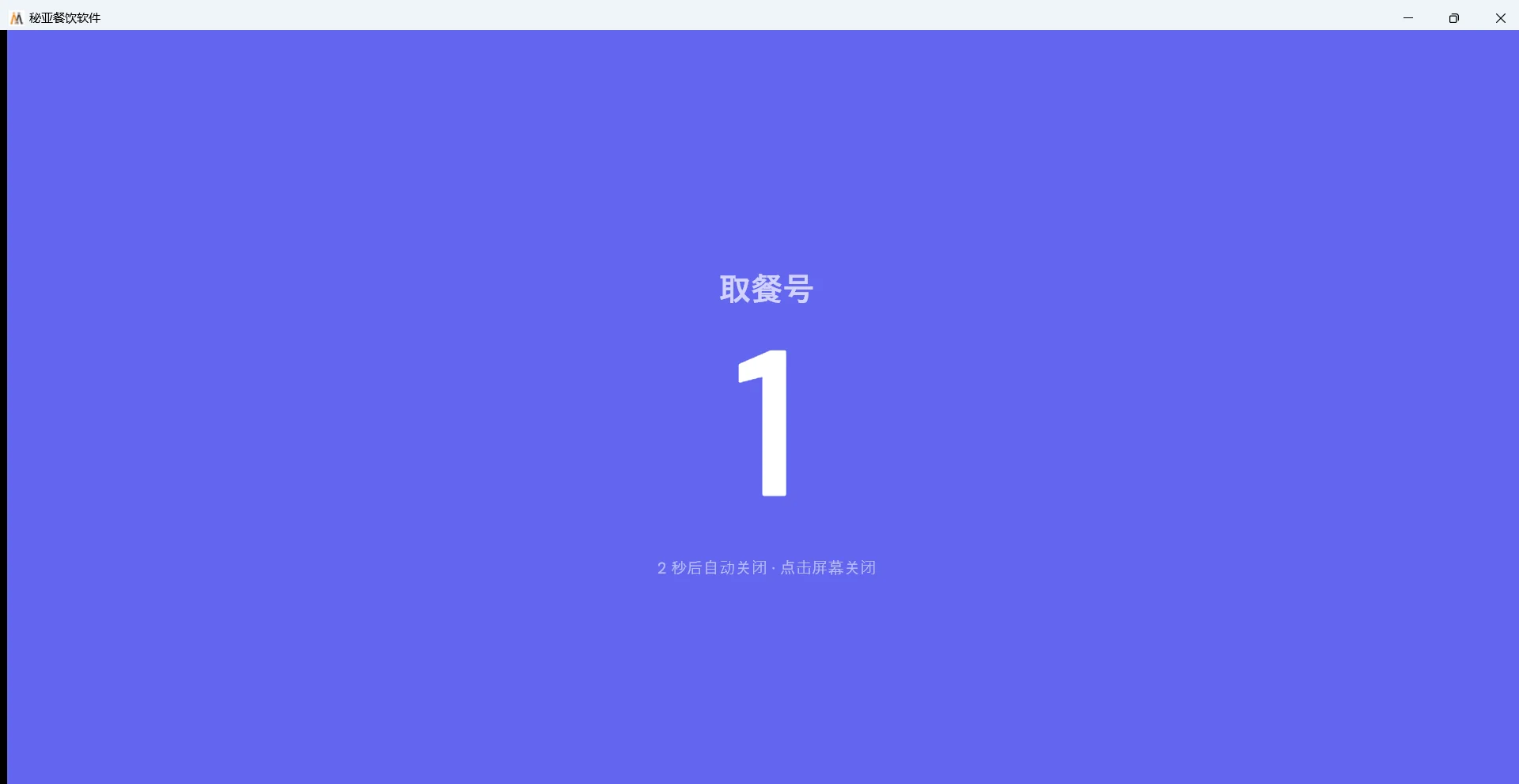
A takeaway counter, a bakery and a drinks bar have no tables to attach an order to. The order takes a number at payment, the number appears on a display, and it moves to ready when the bag or the cup is done.
On a drinks bar the label printer joins in: the cup gets a sticker carrying the number and the exact configuration — size, sugar, ice, toppings — so a barista making six drinks at once is not reconstructing them from memory. That label printer is a different machine from the counter receipt printer, with different paper; budget for both if you sell drinks to go. See hardware.
Choose a counter-service format when the shop is set up and the interface reorganises around this flow — pickup numbers appear, the table map does not, and staff never learn features they will not use.
Channel pricing, and the trap inside it
Commission is a large fixed cost on every platform order, so most restaurants in most markets now price higher on platforms. Channel pricing lets the same dish carry a different price by service type without duplicating the dish, which keeps the best-seller report as one honest line instead of two fragments.
Two cautions before you set the number. Some platforms have run programmes tying a lower commission tier to price parity, usually on pickup orders — read your current contract rather than what another restaurant told you. And a blanket markup gets noticed by the regulars who also walk past your window; selective markups on items that travel well cost you less goodwill. The longer version is in charging more on delivery.
Two things to plan for
Menu changes are two jobs. Change a price here and the counter, the QR page and the receipt all update, because they read one record. The platform's own back office is outside your system and has to be updated separately unless a direct integration exists in your market.
Reconcile against the platform, not the bank. Payouts arrive on the platform's schedule, net of commission, often days later. Reconcile the channel against the platform statement; the bank balance is a slower, separate check. Same principle as daily cash-up.
Can you connect directly to the delivery platform we use?
It depends on the country and the platform, and we will give you a straight yes or no for yours before you buy. What is standard everywhere is that dine-in, takeaway and delivery run on one till with one dish catalogue and one set of books. What is not standard is direct integration with a named local platform.
Can the same dish cost more on delivery than in the restaurant?
Yes — channel pricing sets a different price by service type without duplicating the dish, so your best-seller reports stay honest. Check your platform contract first: some platforms tie their lower commission tiers to price parity, usually on pickup orders.
When dine-in, takeaway and riders all want food at once, who goes first?
Put all three into one production queue ordered by when the order was placed. The channel marker decides how it is packed and which number range it is called on — it is not a licence to jump ahead. A rider order that queue-jumps ten walk-in guests is you paying commission to annoy your direct customers.
How do guests know their takeaway is ready?
Pickup numbers. The order gets a number at payment, the number goes up on a display and moves to ready when it is done. Choose a counter-service format at setup and the table map does not appear at all.